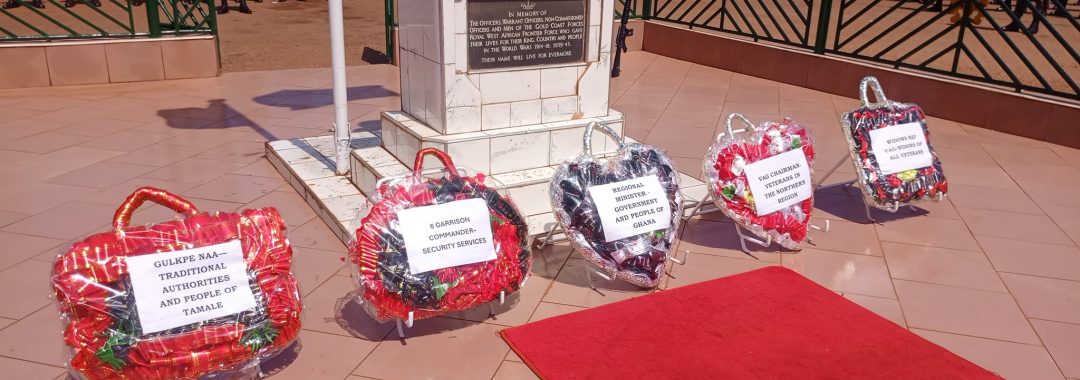
The Northern Regional Minister, Hon. Shani Albassan Shaibu laid wreath on behalf of the President and the people of the Republic of Ghana in memory of the departed veterans at the 79th Remembrance Day Celebration.
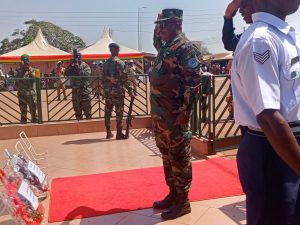
Hon. Shaibu, laid the first wreath. The second wreath laid by the 6 Garrison Commander and the base Commander Air Force Base Tamale, , Air Commodore Joshua Mensah-Larkai, on behalf of all security service personnel in the region
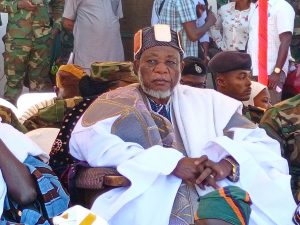
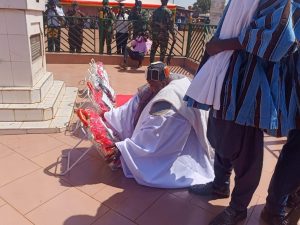
The Chairman of Veterans Administration of Ghana, Northern Region, EX WO1 Adama Ganda, laid the third wreath on behalf of the Veterans and the chief of Choggu( Choggu naa), Alhassan Mahamadu laid the fourth wreath on behalf of the traditional council. The last wreath laid on behalf of all widows of all veterans in the Northern Region by Madam Fidelia Naab.
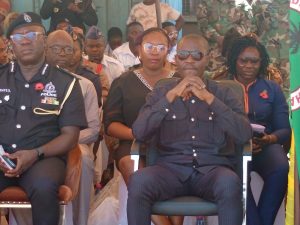
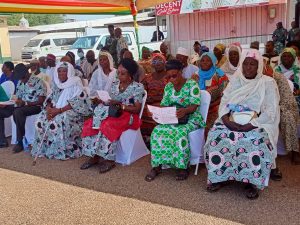
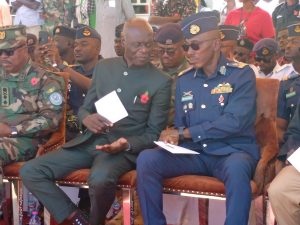
Two minutes silence observed in honour of the fallen heroes during the first and the second world wars. The families of the veterans, MCE for Sagnarigu, Hon. Yakubu Ahmed Mohammed, Ag. Chief Director/RCD of NRCC, Sumaila Ewuntomah Abudu and Assistant Directors of NRCC were in attendance to grace the occasion.
𝑻𝑯𝑬 𝑯𝑰𝑺𝑻𝑶𝑹𝒀 𝑨𝑵𝑫 𝑺𝑰𝑮𝑵𝑰𝑭𝑰𝑪𝑨𝑵𝑪𝑬 𝑶𝑭 𝑻𝑯𝑬 𝑹𝑬𝑴𝑬𝑴𝑩𝑹𝑨𝑵𝑪𝑬 𝑫𝑨𝒀
In 1918, the signing of the Armistice, which ended World War I became effective at 11:00am of 11th November, 1918, when the guns fell silent on the Western Front in France and Belgium, bringing four years of the hostilities to an end. The Gold Coast then part of the British Empire had troops oversees fighting in the war and some lost their lives.
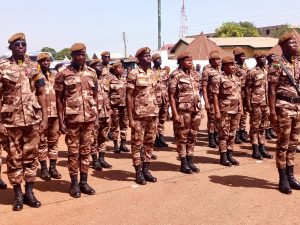
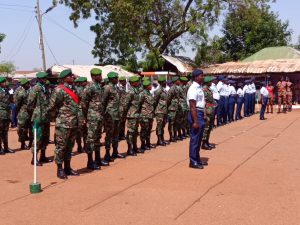
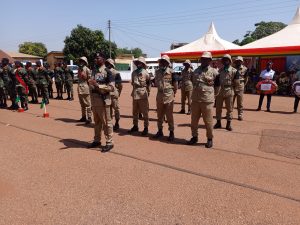
It is for the reason that we pause at the Eleventh hour of the Eleventh day of the Eleventh month of the year to remember the sacrifice of those gallant men and women who have died or suffered in wars and conflicts and all those who have served during the past 109 years of the end of world war I and 79 years of the end of World War II.
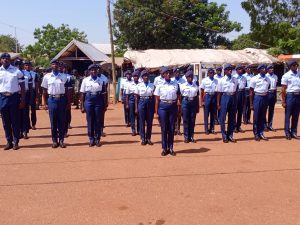

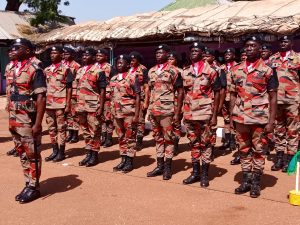
Today, many countries have recognized that the day not only symbolizes the sacrifice of those who fell in the two World Wars, but also those who have died in subsequent conflicts around the world, including those who were deployed on peacekeeping duties. Ghanaian peacekeepers have died in the cause of duty around the world and we need to remember them as well during such commemorative days.
The central element of Remembrance Day ceremony is the two minutes silence sounded by a siren at the Eleventh hour of the Eleventh day of the Eleventh month of the year. During the silence, all movements should cease, so that, in perfect stillness, the thought of everyone may be concentrated on the revered remembrance of the glorious dead. This implies that all persons at that very moment should cease whatever work or enterprise they are engaged in and stand at attention for two minutes as a mark of reverence to all fallen heroes.
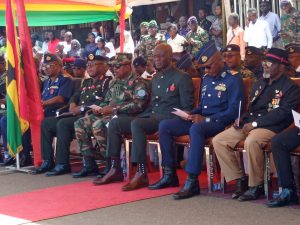
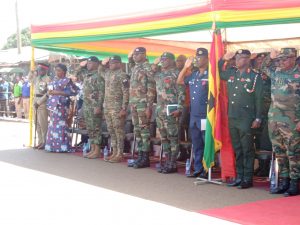
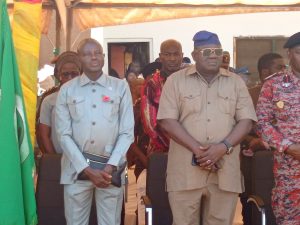
Remembrance Day is a noble gesture of acknowledgement and recognizing the servicemen who sacrificed their lives for the peace we enjoying today. Remembrance Day also underscores the paramount need not only to stop wars, but also to pursue the idea of peace at all costs and at all times as the only condition for survival of the human race. Remembrance Day is indeed an international challenge to the people of the planet and forms the basis and philosophy of the United Nations Organization’s endeavours.
 The red remembrance poppy has become a familiar emblem of Remembrance Day due to the poem “In Flanders Fields”. These people bloomed across some of the worst battlefields of Flanders in World War I, their brilliant red colour an appropriate symbol for the blood spilled in the war.
War veterans make poppies at the Poppy Factory in Richmond, London. It has offered paid employment to wounded, sick or injured ex-servicemen and women since it was founded in 1922. Poppies usually are worn from about 11 days before Remembrance Day.