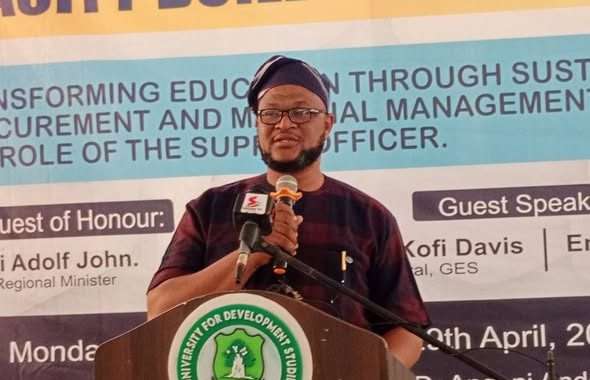
The Northern Regional Political Coordinator, Abdullah A. Baba, has underscored the critical role of procurement and supply chain management in transforming Ghana’s education sector, calling for greater professionalism, integrity, and strategic thinking among supply officers.
He made these remarks on behalf of the Northern Regional Minister, Hon. Ali Adolf John, at the 2nd National Conference and Capacity Building Workshop of the Educational Procurement and Supply Chain Officers Association of Ghana, held on Tuesday, April 28, 2026, at the Andani Auditorium of the University for Development Studies in Tamale.
Addressing participants, Mr. Baba conveyed the warm greetings of the Government of Ghana and the chiefs and people of the Northern Region, while commending EPSCOA for its commitment to professional development and its growing relevance in national development. He noted that the Association’s ability to convene its second national conference signals its maturity and importance as a key stakeholder in the education sector.
He highlighted the significance of the conference theme, “Transforming Education through Sustainable Procurement and Material Management: The Role of the Supply Officer,” describing it as timely and aligned with current national priorities. According to him, Ghana’s education system faces increasing pressure to expand access while improving quality, all within limited financial resources.
“In this context, sustainable procurement and effective material management are no longer optional, they are essential pillars that determine the success or failure of our educational policies,” he stated.
Mr. Baba stressed that while discussions on education reforms often focus on teaching methods, curriculum, and infrastructure, the efficiency of procurement systems remains a fundamental driver of success in the classroom. He explained that timely delivery of quality materials is crucial to achieving educational outcomes, positioning supply officers as indispensable actors within the system.


He therefore called for a shift in mindset among supply officers from traditional storekeeping roles to strategic management functions. This, he said, should involve proactive planning and forecasting, ensuring value for money, maintaining ethical transparency, and enforcing rigorous asset management practices.
The Coordinator further encouraged participants to take full advantage of the capacity-building workshop, describing continuous learning as the hallmark of a strong and respected profession. He urged EPSCOA to deepen collaboration with institutions such as the Public Procurement Authority and other academic and professional bodies to sustain regular training and development for its members.
Touching on concerns raised by the Association including issues of responsibility allowance, professional parity, and safeguarding of the profession, Mr. Baba assured members of government’s commitment to addressing these challenges. He revealed that steps are being taken to strengthen legal and institutional frameworks to ensure that only qualified and certified professionals handle procurement responsibilities.
“Government is committed to ensuring that your status, grading, and recognition reflect the immense value you bring to national development,” he emphasized.
He concluded by urging participants to see themselves as critical partners in Ghana’s education transformation agenda, reminding them that integrity, transparency, and sustainability in procurement practices are key to building public trust and safeguarding national resources.
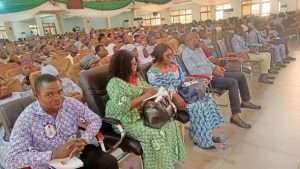
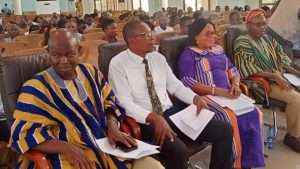
The conference brought together national and regional executives of EPSCOA, heads of educational institutions, agency representatives, and members of the supply chain profession to deliberate on strategies for improving procurement systems in the education sector.
The workshop is expected to enhance the technical capacity and ethical standards of participants, ultimately contributing to more efficient resource management and improved educational outcomes across the country.