
The Head of the Local Government Service (LGS), Professor Lord Kwaku Mensah, has urged staff of the Northern Regional Coordinating Council (NRCC) and Metropolitan, Municipal and District Assemblies (MMDAs) in the Northern Region to uphold discipline, professionalism, accountability and political neutrality in the discharge of their duties.
He said strict adherence to the rules and regulations governing the Local Government Service was essential to improving public service delivery and maintaining public confidence in local government institutions. Professor Mensah made the call on Monday, October 5, 2026, when he engaged management and staff of the NRCC at the Council’s Conference Hall in Tamale as part of a five-day tour of the 16 MMDAs in the region.
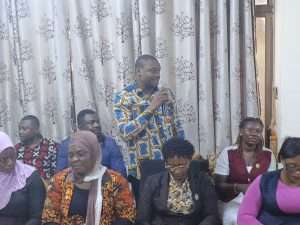


The tour, he explained, was aimed at obtaining first-hand information on the operations of the various assemblies, acquainting himself with developments and challenges at the local level, and interacting directly with staff on critical issues affecting the effective functioning of the Local Government Service.
Professor Mensah was accompanied by senior administrative officers from the LGS headquarters in Accra, including the Chief Director, Director of Human Resource, Deputy Director and Assistant Directors, who supported the engagement and assisted in addressing concerns raised by staff.
In his welcome remarks, the Acting Chief Director of the NRCC, Mr. Sumaila Ewuntomah Abudu, on behalf of management and staff, warmly welcomed Professor Mensah and his entourage to the region. He described the visit as historic and significant, providing a valuable opportunity for management and staff to interact directly with the leadership of the Local Government Service.
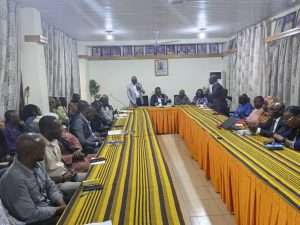

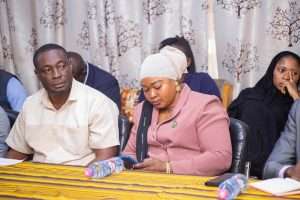
Mr. Abudu urged staff to take full advantage of the engagement by listening attentively, participating actively and asking relevant questions on issues affecting their work and service delivery. He expressed confidence that the interaction would enable staff to share concerns, seek clarification on administrative and professional matters and contribute ideas towards improving the operations of the Service.
In his keynote address, Professor Mensah stressed the need to professionalise the Local Government Service and urged staff to demonstrate competence, commitment and professionalism in the performance of their respective responsibilities. He said the effectiveness of local government depended largely on the quality, attitude and commitment of personnel responsible for delivering services to citizens.
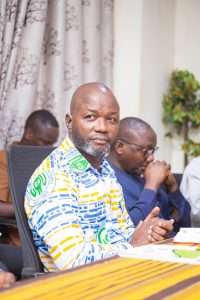

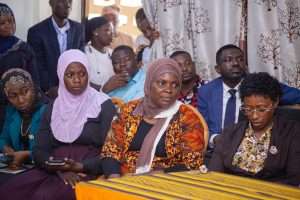
The Head of the LGS also urged Human Resource officers to provide accurate, credible and reliable data to support sound administrative decision-making. He said credible human resource data was critical to decisions on staff deployment, promotion, training, transfers and other personnel-related matters, and therefore must be properly maintained and regularly updated.
Professor Mensah called on the RCC and MMDAs to prioritise capacity-building programmes for staff to equip them with the requisite knowledge and skills to improve productivity and service delivery. He said continuous training and professional development should be regarded as an integral part of strengthening the capacity of the Local Government Service rather than an occasional activity.
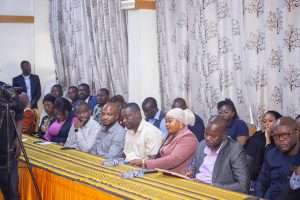
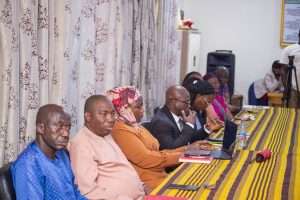
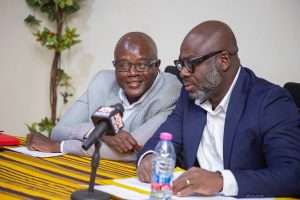
On discipline, he emphasised that punctuality, regular attendance and availability to serve the public were non-negotiable responsibilities of public servants. He disclosed that during visits to some districts, including three unannounced visits, he had observed instances of poor staff attendance, warning that such practices could negatively affect the effectiveness and credibility of local government administration.
He therefore urged staff to adhere strictly to official working hours and remain available at their duty posts to attend to the needs of the public. He further called on the Acting Chief Director, in collaboration with the Regional Minister, Coordinating Directors and MMDCEs, to strengthen measures to promote discipline and accountability across the various assemblies.
Professor Mensah also cautioned staff against frontline partisan political activities in the workplace, stressing that political neutrality was fundamental to the work of the public service. He urged employees to remain professional and neutral in the performance of their official duties, irrespective of their personal political preferences, noting that public servants were expected to serve all citizens fairly.
He raised concerns about inconsistencies in staff records, particularly cases involving the alteration of dates of birth. He cautioned staff against changing their dates of birth in official records where such information differed from details held by the Social Security and National Insurance Trust (SSNIT), urging them to desist from practices that could create discrepancies and affect their employment and retirement arrangements.
The Head of the LGS further called for the redistribution of staff to ensure that human resources were deployed according to institutional needs. He noted that while some departments had relatively more personnel than their operational requirements, others, which he described as “orphan departments”, continued to experience staffing challenges.
He specifically mentioned areas such as Social Welfare, Births and Deaths and the Department of Agriculture as “orphan departments” requiring particular attention. He called for such departments not only to be adequately staffed through appropriate redistribution of personnel but also to be provided with the necessary resources, including office space, furniture, computers and other logistics, to enable them to function effectively and deliver on their mandates.This makes the point clearer that staff redistribution alone is not enough; the departments must also receive adequate logistical and operational support.
Professor Mensah also urged the RCC and MMDAs to provide staff with the necessary working tools and logistics, including computers, furniture and other office equipment, to enable them to perform their duties effectively. He said the provision of adequate resources would not only improve productivity but also motivate staff and create a conducive working environment.
He further encouraged the RCC and MMDAs to consider establishing crèches for the children of staff as part of measures to improve staff welfare and create an enabling environment for employees to work effectively. He said such facilities could particularly support staff with young children and enable them to concentrate better on their official responsibilities.
The Head of the LGS urged staff to respect the organisational hierarchy and follow the appropriate communication channels when raising concerns or seeking administrative decisions. He cautioned against bypassing immediate supervisors and established structures, stressing that adherence to the proper channels of communication was essential for maintaining order, accountability and efficiency within the Service. He also cautioned against the harassment of staff at the workplace and called for professional and respectful working environments.
Professor Mensah announced plans to provide free internet connectivity to Regional Coordinating Councils and MMDAs from next year. He said the initiative was intended to improve access to digital resources, facilitate communication and support the increasingly technology-driven operations of the Local Government Service.
The engagement also provided staff with the opportunity to interact directly with the Head of the Local Government Service. Staff raised concerns, asked questions, sought clarification and offered suggestions on administrative, professional and welfare-related issues, with Professor Mensah responding to the matters raised and providing clarification on issues relating to staff administration, discipline, capacity building, deployment and working conditions.
Prior to the engagement at the NRCC, Professor Mensah and his team paid a courtesy call on the Northern Regional Minister, Hon. Ali Adolf John, where he briefed the Minister on the purpose of the tour. The Minister expressed appreciation to the Head of the Local Government Service for the visit and expressed satisfaction with the work and collaboration of staff of the NRCC.
Following the engagement at the NRCC, Professor Mensah and his entourage, led by the Acting Chief Director, Mr. Sumaila Ewuntomah Abudu, proceeded to the Savelugu Municipal Assembly, Kumbungu District Assembly, Sagnarigu Municipal Assembly and Tamale Metropolitan Assembly. At each assembly, the team interacted with staff and the respective MMDCEs, providing employees with opportunities to share concerns, seek clarification and make suggestions on matters affecting their work.
The first day of the tour therefore covered four of the 16 MMDAs in the Northern Region, with Professor Mensah and his team expected to continue to the remaining 12 assemblies and conclude the five-day exercise on Friday, October 9, 2026. The tour is expected to provide the LGS leadership with first-hand information on staffing, discipline, capacity development, logistics, staff welfare and other operational challenges, while strengthening communication between the LGS headquarters, the RCC and MMDAs to improve the effectiveness and professionalism of local government administration in the region.