
The Minister for Food and Agriculture, Hon. Eric Opoku, has officially launched the Regional West Africa Resilient Rice Value Chains Development Project (REWARD), a US$18.8 million African Development Bank (AfDB)-supported initiative aimed at strengthening Ghana’s rice industry, increasing domestic production, improving farmers’ livelihoods and reducing the country’s dependence on imported rice.
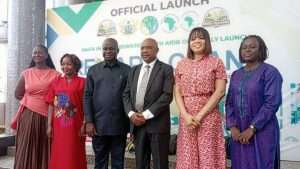
The launch, held on Monday, November 9, 2026, at the Mariam Hotel in Tamale, brought together the Northern Regional Minister, Hon. Ali Adolf John; the Member of Parliament for Sagnarigu; Metropolitan, Municipal and District Chief Executives (MMDCEs), officials of the Ministry of Finance and Ministry of Food and Agriculture, representatives of the AfDB Country Office; the Northern Development Authority, traditional authorities, development partners, farmer organisations; private-sector actors and other stakeholders.



Delivering the welcome address, the Northern Regional Minister, Hon. Ali Adolf John, expressed appreciation to the Government of Ghana, the African Development Bank and the Ministry of Food and Agriculture for their commitment to strengthening the agricultural sector through the REWARD Project. He described the initiative as particularly significant to the Northern Region, given its considerable potential to contribute to Ghana’s rice production and broader agricultural development when farmers and other value-chain actors receive the necessary support, infrastructure, reliable services and access to viable markets.


The Regional Minister emphasised that rice remained an important food crop and a major source of income for many households, explaining that its production and marketing connected several actors, including farmers, input suppliers, processors, transporters, traders and consumers. He observed that strengthening the entire value chain would generate benefits beyond agricultural production by creating economic opportunities, improving household incomes and supporting businesses engaged in processing, transportation and marketing.


He acknowledged the challenges confronting rice production, including changing weather patterns, pressure on natural resources, rising production costs, inadequate infrastructure and limited market access. He stressed that agricultural resilience should go beyond responding to difficult farming seasons to include helping farmers and businesses anticipate risks, adapt to changing conditions and sustain their livelihoods, while ensuring that women and young people actively participate in the various segments of the value chain.
Hon. Adolf called on implementing partners to work closely with regional and district authorities, traditional leaders, farming communities, Farmer-Based Organisations, processors, traders and other private-sector stakeholders to ensure effective coordination and successful implementation. He also urged MMDCEs and technical officers to ensure that the project complemented existing development plans and agricultural programmes, avoided duplication and promoted the efficient utilisation of resources.
Delivering the keynote address, the Minister for Food and Agriculture, Hon. Eric Opoku, described the launch as a significant milestone in government’s determination to transform Ghana’s agricultural sector, strengthen national food security, reduce food import dependence and create sustainable economic opportunities, particularly for farmers in the northern parts of the country. On behalf of President John Dramani Mahama and the Government of Ghana, he expressed profound appreciation to the African Development Bank for providing a grant of US$18.8 million towards the implementation of the project.

Addressing Ghana’s growing rice consumption and dependence on imports, Hon. Opoku disclosed that milled rice production increased from approximately 685,000 metric tonnes in 2022 to 960,000 metric tonnes in 2025. However, domestic production currently meets only about 56 per cent of national consumption requirements, leaving the remaining 44 per cent to be supplied through imports. He further revealed that Ghana spends an estimated US$500 million annually on rice imports, stressing the need for deliberate interventions to reverse the situation.
The Minister reaffirmed government’s ambition of achieving rice self-sufficiency by 2028, supported by an ambitious paddy production target of 3.31 million metric tonnes. He explained that the target went beyond agricultural production, describing it as an economic transformation agenda intended to strengthen Ghana’s food sovereignty, conserve foreign exchange, create employment and build a more resilient national economy.
Hon. Opoku explained that the REWARD Project was being implemented within the broader framework of government’s flagship Feed Ghana Programme, which seeks to increase food production, strengthen agricultural value chains, expand agro-processing, improve market access and position agriculture as a major driver of economic growth and employment creation. He described REWARD as a practical intervention designed to address longstanding constraints affecting the competitiveness of Ghana’s rice industry through improved seeds, modern farming practices, mechanisation, processing, marketing and reliable market linkages.
He acknowledged the African Development Bank’s longstanding contribution to agricultural development in Ghana, particularly through interventions such as the Savannah Zone Agricultural Productivity Improvement Project, the Savannah Investment Programme and the Savannah Agriculture Value Chain Development Project. These initiatives, he noted, had contributed to strengthening agricultural productivity, supporting commercial crop production and creating economic opportunities for women and young people across the northern savannah.
Providing details of the project, the Minister disclosed that REWARD would be implemented across seven beneficiary areas: Tamale Metropolitan, Mion, Savelugu, Mamprugu-Moagduri, West Gonja, Wa Municipal and Nandom. Approximately 20,000 smallholder farmers, including women and young people, are expected to benefit directly, while other beneficiaries will include seed producers, machinery operators, processors, transporters, traders and businesses connected to the rice value chain.
A major component of the intervention, he disclosed, was the development of 3,200 hectares of land for rice production within the Northern Savannah Ecological Zone. He explained that the investment would expand the productive capacity of beneficiary communities, enabling farmers to increase cultivated areas and improve yields. He, however, emphasised the need for sustainable agricultural practices, responsible management of land and water resources and the adoption of climate-smart farming techniques.
On improving productivity, Hon. Opoku identified access to quality seeds as fundamental, disclosing that selected seed centres and processors would receive seed-cleaning equipment, while farmers would receive support to access appropriate agricultural inputs and adopt improved production practices. He further announced plans to deploy agricultural machinery, including rotary tillers, seed drills, rice transplanters, boom sprayers and mini crawler combine harvesters, to address labour-intensive farming, delayed operations and post-harvest losses. He urged the implementation team to prioritise operator training, equipment maintenance and transparent access arrangements.
The Minister further emphasised that increased rice production must be accompanied by improved processing capacity. He disclosed that existing processing facilities would receive complementary equipment, including colour sorters, destoners and improved parboiling vessels, to enhance the quality, cleanliness and consistency of locally processed rice. He expressed government’s ambition to position Ghanaian rice as a competitive and preferred choice in supermarkets, restaurants, hotels, markets and households across the country.
Addressing private-sector participation, Hon. Opoku called on investors to take advantage of opportunities in seed production, mechanisation services, rice processing, packaging, storage and distribution. He encouraged meaningful partnerships with farmers, investment in modern technologies and dependable purchasing arrangements to guarantee markets for locally produced rice, stressing that government’s agricultural transformation agenda required strong collaboration among the public sector, private investors, development partners and farming communities.
He described farmers as central to the country’s agricultural transformation agenda and urged them to embrace the opportunities provided by the project, work closely with agricultural extension officers, adopt improved agronomic practices and strengthen their Farmer-Based Organisations. He also underscored the importance of women’s participation and youth inclusion, emphasising equitable access to productive resources, modern technology, technical support and markets to make agriculture an attractive and profitable enterprise.
The Agric Minister called for transparency, accountability, efficiency and timely delivery in the implementation of the project, insisting that resources committed must translate into measurable improvements in beneficiaries’ lives. He charged the implementation team, regional and district agricultural officers, MMDAs and traditional authorities to demonstrate professionalism and commitment. He stressed that success should be measured by increased yields, reduced production costs, lower post-harvest losses, improved rice quality, stronger market access, higher farmer incomes and reduced dependence on imported rice.
Hon. Opoku also appealed to Ghanaian households, restaurants, hotels, food vendors, schools and public and private institutions to make locally produced rice their preferred choice. He noted that purchasing Ghanaian rice supported farmers, sustained jobs and strengthened businesses across the agricultural value chain, while urging farmers, processors and distributors to reciprocate consumers’ confidence through consistent quality, competitive pricing and dependable supply. He concluded by reaffirming government’s commitment to agricultural transformation and expressed appreciation to the AfDB, implementing institutions, development partners and other stakeholders for their support.