
The Northern Regional Coordinating Council (NRCC) has reaffirmed its commitment to promoting orderly, sustainable and well-coordinated development across the region through effective spatial planning and land use management.
This came to light during an orientation workshop on the revised Spatial Planning Documents held on Tuesday, 26th May, 2026 at the Residency Round Pavilion in Tamale. The workshop brought together officials from the Land Use and Spatial Planning Authority (LUSPA), Regional Spatial Planning Committee members, Heads of State Institutions, representatives of professional bodies, Civil Society Organizations (CSOs), development planners and members of the media.
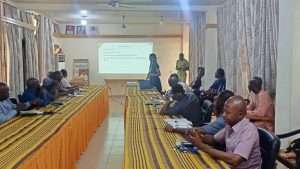
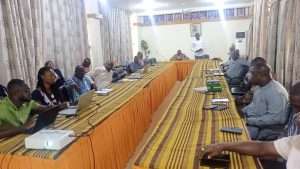

Delivering remarks on behalf of the Northern Regional Minister, Hon. Ali Adolf John, the Chief Director of the Northern Regional Coordinating Council, Sumaila Ewuntomah Abudu, described spatial planning as a critical tool for translating development visions into orderly, sustainable and equitable physical realities.
He noted that the revised planning documents, namely the Zoning Guidelines and Planning Standards as well as the Manual for Preparation of Spatial Plans, are intended to strengthen efficiency in land use planning and ensure the effective utilization of land resources within communities across the region and the country at large.
According to him, the revised documents have been aligned with key national legal frameworks including the Land Use and Spatial Planning Act, 2016 (Act 925), the Local Governance Act, 2016 (Act 936), and the Land Use and Spatial Planning Regulations, 2019 (L.I. 2384).
Mr. Abudu emphasized that the alignment of the revised documents with existing legal frameworks is not only a statutory requirement but also demonstrates the collective commitment of stakeholders towards governing land use planning processes with clarity, efficiency and foresight.
He further explained that the revisions carefully integrate contemporary physical development trends and evolving land use dynamics, which continue to shape communities and landscapes through economic, social and environmental changes.



“Our landscapes and communities are living entities continuously shaped by economic, social and environmental forces. The updated guidelines and manual therefore serve as essential tools to guide local authorities, planners, developers and stakeholders in managing growth and change in a manner that fosters sustainable human settlement,” he stated.
The Chief Director stressed that the workshop was designed to enhance knowledge sharing and strengthen the capacity of stakeholders to ensure consistency and effectiveness in spatial planning and zoning practices across the various Municipal and District Assemblies within the region.
He encouraged participants to actively engage in discussions, share practical field experiences and seek clarity on the application of the revised guidelines to enable effective implementation at the local level.
Mr. Abudu reiterated the commitment of the Northern Regional Coordinating Council to supporting spatial planning initiatives that promote good governance, environmental sustainability and socio-economic development.
He urged all stakeholders to utilize the revised spatial planning documents with diligence, transparency and renewed dedication in order to build a region that serves as a model of structured and sustainable growth.
According to Mr. Patrick Apraku of Land Use Spatial Planning Authority, spatial planning remains a critical tool for sustainable development as it provides a clear framework for the efficient use of land, effective management of natural resources, coordinated infrastructure delivery and the creation of inclusive, resilient and livable communities. He stressed that with Ghana’s rapidly growing population and increasing development pressures, especially within urban centers, there is an urgent need for more coordinated, participatory and responsive planning approaches to effectively guide development and manage human settlements.
Mr. Apraku further explained that the revised planning documents were developed in line with the Land Use Spatial Planning Act, 2016 (Act 925) and the Land Use and Spatial Planning Regulations, 2019 (L.I. 2384), which mandate LUSPA to prepare spatial plans, strengthen institutional capacities and issue guidelines to ensure compliance with national planning standards. He noted that the revision became necessary to align the documents with current legal, policy and development frameworks while addressing calls for greater clarity, consistency, standardization and stakeholder participation in land use planning processes. He added that the revised spatial planning documents were officially launched by the in November 2025 and have since been distributed to Regional Coordinating Councils, Metropolitan, Municipal and District Assemblies as well as other key stakeholders across the country.
The workshop formed part of efforts aimed at equipping planners, technical officers and relevant stakeholders with the necessary knowledge and practical understanding required for the successful implementation of the revised spatial planning framework across the Northern Region.
See less