
The Northern Regional Minister, Hon. Ali Adolf John, has called for intensified public education and stronger stakeholder collaboration to ensure that eligible patients in the Northern Region understand and benefit from the Ghana Medical Trust Fund, popularly known as MahamaCares.
The Minister made the call on Thursday, October 22, 2026, when he delivered the welcome address at a stakeholders’ engagement forum on the Ghana Medical Trust Fund at the Global Dreams Hotel in Tamale. The forum brought together representatives of the Fund’s Secretariat, health sector institutions, Metropolitan, Municipal and District Assemblies (MMDAs), traditional authorities, civil society organisations, healthcare professionals and other stakeholders to discuss the implementation of the initiative and its potential to improve access to specialised medical treatment.


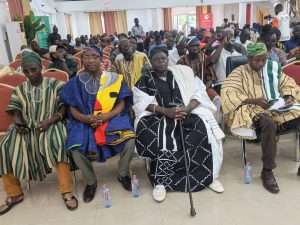
Welcoming participants on behalf of the Northern Regional Coordinating Council (NRCC) and the chiefs and people of the Northern Region, Hon. Ali Adolf John described the engagement as an important opportunity to strengthen collective efforts towards improving healthcare access, protecting vulnerable households from the financial burden of serious illnesses and promoting the well-being of the population. He emphasised that healthcare was not merely a social service but a fundamental requirement for human dignity, economic productivity and national development.
Hon. Adolf commended the management of the Ghana Medical Trust Fund for organising the forum, noting that the engagement would deepen stakeholders’ understanding of the initiative, identify implementation challenges and strengthen the partnerships necessary for its effective delivery. He expressed confidence that the discussions would generate practical recommendations to improve healthcare outcomes in the Northern Region and the country at large.
The Regional Minister explained that MahamaCares formed part of the government’s broader healthcare agenda under the leadership of President John Dramani Mahama, which recognises the need for an integrated healthcare system combining disease prevention, early detection, routine treatment, health insurance and access to specialised medical services. While acknowledging the contribution of the National Health Insurance Scheme (NHIS) towards expanding access to healthcare, he noted that certain chronic and non-communicable diseases required expensive specialist consultations, advanced diagnostic procedures, prolonged treatment and costly medicines that might not be fully covered under existing insurance arrangements.
He stated that the establishment of the Ghana Medical Trust Fund represented an important intervention in addressing gaps in healthcare financing and making specialised treatment more accessible, equitable and financially sustainable. Hon. Ali Adolf John further highlighted the financial consequences of serious illnesses such as cancer, heart disease, kidney failure and stroke, explaining that some families were compelled to sell valuable assets, exhaust their savings or borrow money to finance treatment, while others delayed seeking medical attention because they could not afford the associated costs.

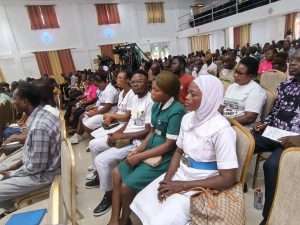
According to the Minister, the consequences of these financial difficulties extended beyond individual patients, potentially pushing families into poverty, depriving children of their caregivers and reducing the productive capacity of communities. He therefore underscored the importance of interventions that could reduce financial barriers to specialised medical care and protect vulnerable households from the economic consequences of serious illnesses.
Turning attention to the Northern Region, Hon. Ali Adolf John observed that the region stood to benefit significantly from the effective implementation of MahamaCares, particularly because of the difficulties many households encountered in accessing specialised healthcare. He explained that transportation to referral facilities, diagnostic investigations, medicines and prolonged treatment could place considerable pressure on household incomes, especially among residents of rural and hard-to-reach communities where access to specialist services remained a challenge.


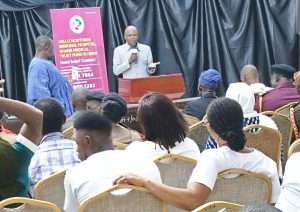
The Regional Minister disclosed that Tamale Teaching Hospital and other designated private hospitals had been identified under the Fund to serve the Northern Region. He described the arrangement as a foundation for strengthening referral pathways and improving access to assistance for eligible patients. However, he cautioned that the designation of hospitals alone would not guarantee the initiative’s success, stressing that residents needed adequate information about the Fund, the medical conditions it supported, the eligibility requirements and the procedures for applying for assistance.
As part of the engagement, a representative of the Ghana Medical Trust Fund Secretariat delivered a presentation on the Fund’s mandate, operations, interventions and impact. The presentation provided participants with an overview of the Fund’s objectives and operational framework, highlighting its role in addressing healthcare financing challenges associated with the treatment of serious medical conditions. It also provided an opportunity for stakeholders to deepen their understanding of the Fund’s implementation arrangements and its potential to improve access to specialised healthcare for eligible patients.
Following the presentation, participants were given the opportunity to ask questions and seek clarification on various aspects of the Fund’s mandate, operations and access procedures. The interactive session enabled stakeholders to raise concerns, obtain further explanations and enhance their understanding of how eligible patients could benefit from the initiative. The discussions also provided an avenue for clarifying issues relating to the Fund’s implementation and accessibility within the Northern Region.
Building on the discussions, Hon. Adolf urged the Regional Health Directorate, hospital administrators, district health management teams, MMDAs, traditional authorities and civil society organisations to intensify community education following the engagement. He emphasised that their collective involvement would be essential in ensuring that accurate information reached communities and that eligible patients were guided towards appropriate referral and application procedures.
The Minister further encouraged stakeholders to ensure that residents clearly understood the eligibility requirements, approved medical conditions, application procedures and documentation required to access assistance under the Fund. He explained that providing clear and reliable information would help prevent misinformation, unrealistic expectations and unnecessary delays, while enabling eligible patients to make informed decisions about seeking specialised medical treatment.
Hon. Adolf stressed that effective collaboration among health institutions, local government authorities, traditional leaders, civil society organisations and other relevant stakeholders would be critical to translating the objectives of MahamaCares into tangible benefits for ordinary citizens. He expressed the hope that the deliberations would move stakeholders beyond general awareness towards a shared understanding of how the Fund operated and how eligible patients could access its benefits.
In concluding his address, the Northern Regional Minister reiterated his appreciation to the management of the Ghana Medical Trust Fund and all participating stakeholders for their commitment to improving healthcare delivery. He expressed optimism that the forum would strengthen partnerships, deepen public understanding and generate actionable recommendations to improve access to specialised healthcare in the Northern Region and Ghana as a whole.
The stakeholders’ engagement formed part of efforts to promote awareness and understanding of the Ghana Medical Trust Fund and strengthen collaboration among institutions supporting its implementation. Sustained public education, effective referral arrangements and coordinated stakeholder participation will be important in ensuring that eligible patients are informed about the Fund and can navigate the process of seeking assistance for specialised medical treatment.