
The Northern Regional Minister, Hon. Ali Adolf John, has called for stronger collaboration among government institutions, security agencies, traditional authorities, civil society organizations, development partners and local communities to address the growing security threats posed by climate change in Northern Ghana.
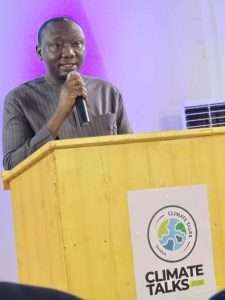
The call was made in a speech delivered on his behalf by the Director of Administration of the Northern Regional Coordinating Council (NRCC), Mr. Abdul Rahman Ahmed Baba, during Climate Talks 2026, organized by the Embassy of Germany under the theme, “Building Climate Security Resilience in Ghana.” The event took place on Wednesday, June 10, 2026, at Pioneer Lodge in Tamale.



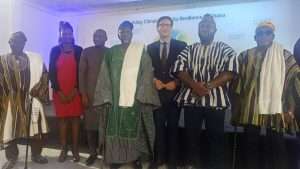
Hon. Ali Adolf John commended the Embassy of Germany and its partners for bringing together policymakers, security practitioners, traditional leaders, civil society actors, researchers, youth leaders, development partners, farmer and herder associations, and representatives of Metropolitan, Municipal and District Assemblies to deliberate on the growing nexus between climate change, security and sustainable development.
According to the Minister, climate change has evolved beyond an environmental concern and has become a lived reality with profound implications for livelihoods, social stability and peacebuilding. He stressed that the phenomenon now presents an emerging security challenge that requires urgent and coordinated action from all stakeholders.

He noted that Northern Ghana remains one of the areas most vulnerable to climate variability and environmental degradation, citing rising temperatures, prolonged dry spells, erratic rainfall patterns, flooding, land degradation and diminishing water resources as major threats to livelihoods and community resilience.
The Minister explained that agriculture, livestock production and natural resource-based activities have long been the foundation of economic survival for many households in the region. However, climate-induced pressures are increasingly disrupting these livelihood systems and creating conditions that fuel competition, tension and conflict.
Hon. Ali Adolf John identified farmer-herder conflicts as one of the most visible manifestations of climate-related insecurity. He observed that shrinking grazing lands and scarce water resources have intensified competition between farmers and herders, often resulting in farm destruction, livestock losses, reprisal attacks, displacement of families and weakened social cohesion within communities.
He emphasized the need to strengthen conflict prevention, mediation and early response mechanisms, while fostering trust and cooperation between communities and security institutions. He also advocated the revitalization of traditional conflict resolution systems, which have historically played a vital role in maintaining peace and harmony.
The Minister urged participants to recognize climate change not only as an environmental issue but also as a development, governance and security challenge. He noted that addressing the complex impacts of climate change requires integrated responses and stronger partnerships, as security agencies alone cannot tackle the problem.
To build resilience, Hon. Ali Adolf John called for increased investment in climate-smart and climate-resilient agriculture to improve food security, protect livelihoods and reduce pressure on natural resources. He also advocated inclusive decision-making processes that ensure women, youth, farmers, herders and other vulnerable groups have a meaningful voice in matters affecting their communities.
Reaffirming government’s commitment to climate adaptation and sustainable development, the Minister stated that Ghana continues to implement initiatives focused on environmental protection, sustainable agriculture, strengthened local governance systems and community resilience. He added that Climate Talks 2026 aligns with the country’s broader agenda of promoting peace, social cohesion and sustainable development.
Hon. Ali Adolf John expressed confidence that the forum would generate practical recommendations to address climate-related security risks and strengthen resilience in Northern Ghana. He urged participants to engage actively, deepen partnerships and work collectively toward sustainable solutions. On behalf of the Minister, Mr. Abdul Rahman Ahmed Baba officially declared Climate Talks 2026 open and expressed optimism that the forum would contribute significantly to climate resilience, peaceful coexistence and sustainable livelihoods across the region.