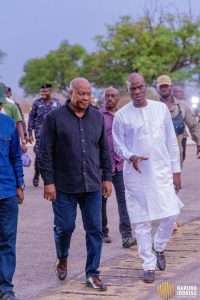
The President of Ghana, John Dramani Mahama, on Sunday, April 19, 2026, continued his two-day working tour of the Northern Region with a focus on energy stabilisation, infrastructure development and direct engagement with citizens under his “Resetting Ghana” agenda.
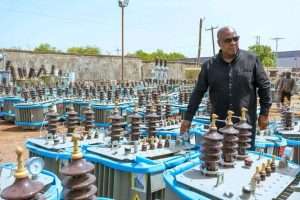
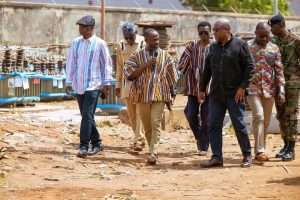
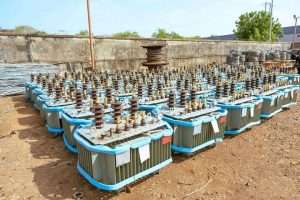
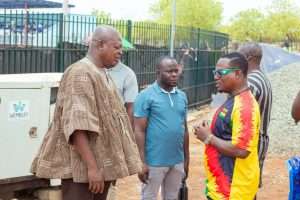
The President began the day with an inspection of transformers at the yard of the Northern Electricity Distribution Company (NEDCo) in Tamale, aimed at improving power distribution across the region.
Briefing the President, the Minister for Energy and Green Transition, John Jinapor, revealed that NEDCo had secured 500 transformers, exceeding the 400 units initially requested. He noted that the additional transformers would enhance reliability and reduce outages, while appealing to the public for patience as installation progresses.
He further disclosed that government is deploying high-capacity transformers across NEDCo’s operational areas to address system overloads and improve grid stability.
President Mahama, after inspecting the equipment, reaffirmed government’s commitment to stabilising power supply nationwide. He also highlighted plans to localise transformer production to build local capacity and ensure long-term sustainability, while commending NEDCo and the Electricity Company of Ghana adjust (ECG) for their efforts.
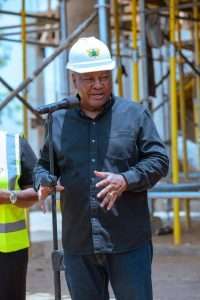
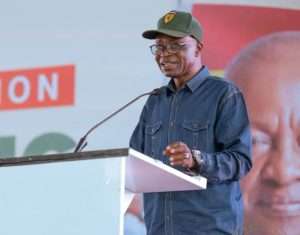
As part of the tour, the President visited major institutions in Tamale to assess ongoing projects. At Tamale College of Education (TATCO), he inspected a dormitory under construction to improve student accommodation.
At the Tamale Teaching Hospital, he examined progress on a modern Catheterization Laboratory (CATLAB), expected to enhance specialised healthcare services.
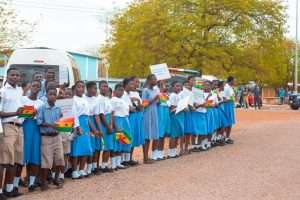
The President also visited the Ghana Senior High School (GHANASCO), where he inspected a 12-unit classroom block and a 5,000-seater auditorium aimed at expanding educational infrastructure.
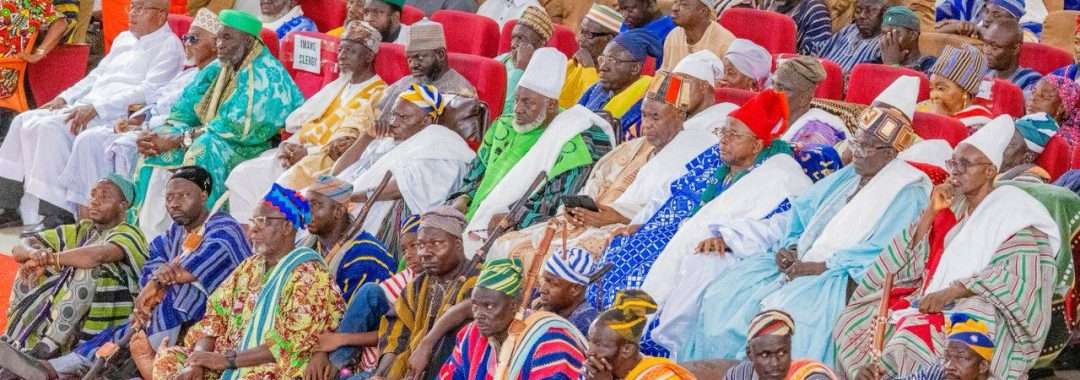
A major highlight of the day was a stakeholders’ forum held at the University for Development Studies (UDS) auditorium in Tamale, where the Northern Regional Minister, Ali Adolf John, presented a comprehensive briefing on the state of development in the region.
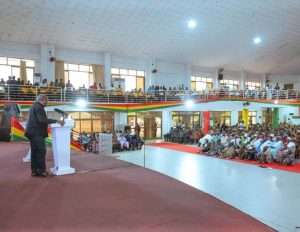
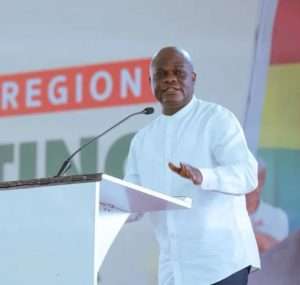

Welcoming the President, Hon. Ali Adolf John described the forum as an important platform for dialogue between government and citizens. He outlined key challenges confronting the region, including inadequate infrastructure, unemployment, poor access to water and sanitation, and chieftaincy disputes.
The Minister disclosed that about 32.1 percent of residents lack access to clean drinking water, while only 10 percent have improved sanitation facilities.
To address this, he indicated that 76 boreholes and 125 mechanised boreholes have been constructed within the past year. He also raised concerns about Tamale’s water crisis, noting that the city’s aging water system is overstretched.
He commended the Ghana Water Company Limited for increasing water production from 28,000 to 40,000 cubic metres daily, but urged faster progress on the Yapei-Tamale water project.
On health, the Minister highlighted the region’s contribution to preventable deaths and welcomed the government’s Free Health Care Initiative. He revealed that 34 CHPS compounds have been constructed and equipped to improve primary healthcare delivery.
In the education sector, he acknowledged poor academic performance and attributed it to infrastructure deficits and weak supervision. He noted that 121 contracts have been awarded for the construction of educational facilities, alongside interventions such as extra classes and mock examinations.
Hon. Ali Adolf John disclosed that only 19 percent of the region’s estimated 7,000-kilometre road network is in good condition. He reported that over 900 kilometres of roads are currently under construction, supported by initiatives such as the District Roads Improvement Programme.
He emphasised the importance of road infrastructure in boosting agriculture and trade, particularly with neighbouring countries.
Addressing youth unemployment, the Minister indicated that 3,331 apprentices have been trained under the National Apprenticeship Programme, while 1,005 beneficiaries have been engaged under the Adwumawura Programme, with several receiving support for business development.
He also touched on peace and security, acknowledging past conflicts but assuring that the region remains largely peaceful due to collaboration between the Regional Security Council and traditional authorities. He commended various organisations for their contributions to peacebuilding.
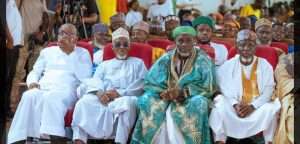
The forum culminated in a grand durbar themed “Accounting to the People,” where President Mahama and his ministers outlined government achievements and engaged directly with citizens.
In his keynote address, President Mahama stated that his administration has maintained economic stability despite global challenges such as rising fuel prices and petroleum supply disruptions.
He noted that government interventions have helped cushion citizens and stabilise the economy, with inflation declining from over 24 percent to below 4 percent through fiscal discipline.
The President also highlighted that despite Ghana’s limited access to international capital markets following the debt default, government has continued to finance key development projects using domestic resources.
“Even after Ghana’s debt default cut off access to international capital markets, government did not stall development. We financed major interventions using domestic resources, proving the power of mobilizing and deploying our own resources effectively,” he stated.
The Northern Regional Minister, expressed gratitude to the President, government, and development partners including , UNICEF, World Vision Programme, Action Aid and GIZ for their continued support.
The President’s tour of the Northern Region reinforced government’s commitment to addressing infrastructure gaps, improving energy supply, creating jobs, and promoting transparency through direct engagement with the people.